
Introduction: The Screen as a Lethal Weapon
As we navigate the road landscape of 2026, the smartphone has cemented its role as the primary source of cognitive, manual, and visual distraction for drivers globally. Despite the integration of advanced semi-autonomous driving systems and hands-free infotainment, the temptation of the notification remains a significant threat to road safety. What was once considered a minor traffic infraction has evolved into a major legal and financial liability.
In 2026, law enforcement agencies have moved beyond simple visual observation. The implementation of AI-powered roadside cameras and “device forensics” during accident investigations has made it nearly impossible to hide mobile phone use at the time of a collision. For the modern driver, a single text message is no longer just a safety risk; it is a catalyst for a chain reaction of legal penalties, massive insurance premium hikes, and potentially life-altering civil lawsuits. This 1,500+ word guide explores the stringent mobile laws of 2026 and the deep financial “black hole” that follows a distracted driving citation.
Part I: The Legal Landscape of 2026 – Beyond “Handheld” Bans
The legislation surrounding mobile phone use in vehicles has reached a “Zero Tolerance” phase in most developed nations. Legislators have recognized that “hands-free” does not necessarily mean “brain-free.”
1. The Expansion of “Electronic Device Manipulation” Laws
In 2026, the legal definition of “using a phone” has been broadened significantly. In many jurisdictions, the law now prohibits any “manual manipulation” of a mobile device, even if it is mounted on the dashboard. This includes:
- Scrolling through Playlists: Taking more than a single tap to change a song is now punishable in several U.S. states and UK territories.
- Recording Video: The rise of “vlogging while driving” has led to specific statutes against recording content for social media, categorized as “Gross Negligence” in the event of an accident.
- Smartwatch Integration: 2026 laws now explicitly treat interacting with a smartwatch (replying to a text via wrist-tap) with the same severity as holding a smartphone.
2. AI Enforcement: The Unseen Eye
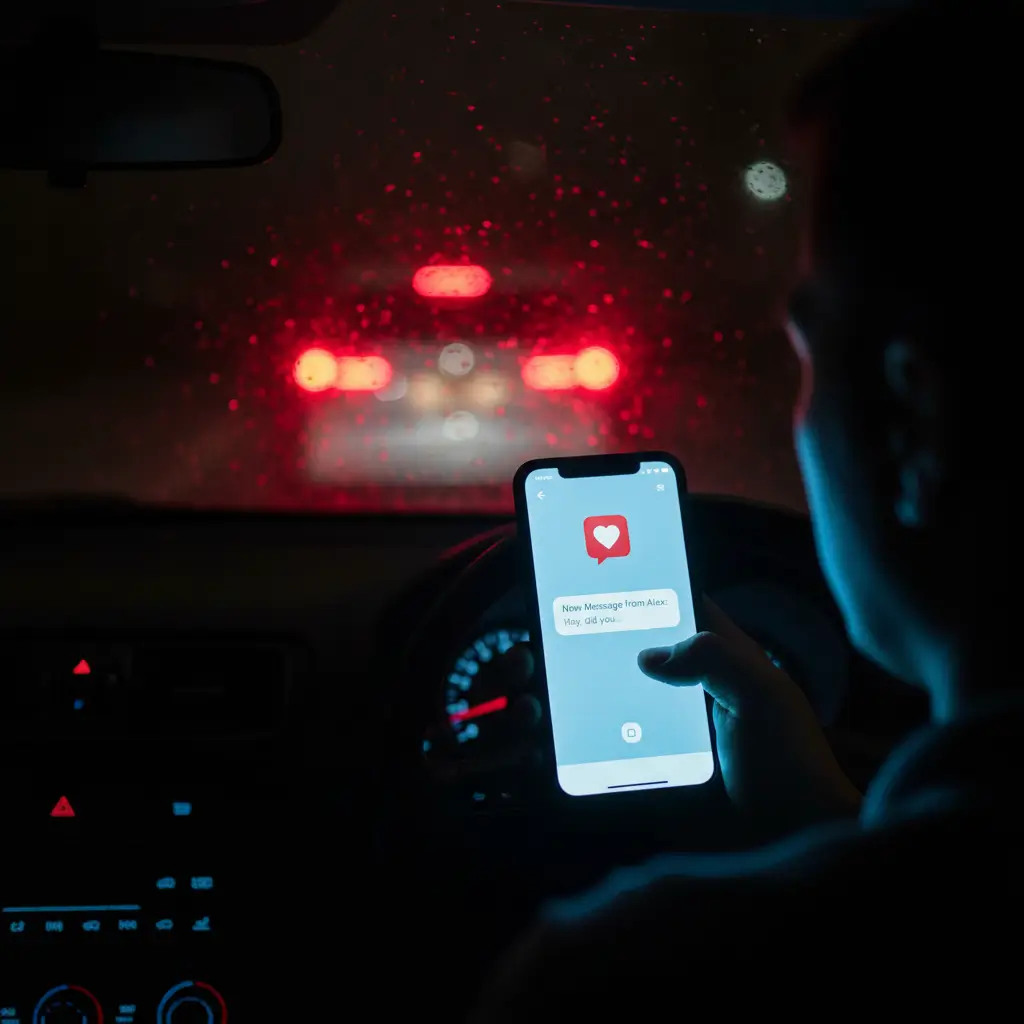
Law enforcement in 2026 utilizes high-definition, AI-integrated cameras capable of peering through windshields at high speeds. These cameras can detect the characteristic glow of a screen or the posture of a driver looking down at their lap. In the UK and parts of Australia, these systems automatically issue “Fixed Penalty Notices” (FPNs) that arrive in the driver’s digital mailbox within 24 hours.
Part II: The Financial Fallout – Insurance Premiums & Surcharges
This is where the true “cost” of a mobile phone becomes apparent. In the insurance industry, distracted driving is now categorized alongside DUI (Driving Under the Influence) in terms of risk profile.
3. The “Distraction Surcharge”
According to 2025 and 2026 insurance data from The Zebra and ThinkInsure, a single distracted driving ticket can increase your annual car insurance premium by an average of 23% to 30%.
- The Multi-Year Hit: Unlike a minor speeding ticket, a mobile phone conviction often stays on your “Insurance Score” for 3 to 5 years.
- Premium Math: If your annual premium is $2,000, a 25% hike adds $500 per year. Over five years, that one text message costs you **$2,500 in insurance alone**, far exceeding the actual court fine.
4. Loss of “Safe Driver” Tiering
Most premium insurers (State Farm, Geico, Progressive) offer “Good Driver Discounts” that can save policyholders up to 40%. A mobile phone citation is an immediate “Disqualifying Event.” You aren’t just paying more because of the surcharge; you are paying more because you have lost your elite status, moving from a “Preferred” to a “Standard” or even “Non-Standard” (High-Risk) category.
Part III: Civil Liability and the “Deep Pocket” Strategy
If a distracted driver causes an accident resulting in injury, the legal consequences move from the traffic court to the civil court—where the stakes are in the millions.
5. Punitive Damages and Negligence
Personal injury lawyers in 2026 have become experts at “Digital Discovery.” In any significant car accident lawsuit, the first thing a plaintiff’s attorney will do is subpoena your mobile carrier records and cloud data.
- The “Smoking Gun”: If timestamps show you sent a WhatsApp message or opened TikTok 10 seconds before the impact, you are no longer just “at fault”—you are grossly negligent.
- Beyond Policy Limits: In cases of gross negligence, courts may award “Punitive Damages.” These are designed to punish the defendant and are often not covered by standard insurance policies, meaning the driver is personally responsible for the payout.
6. The “Corporate Liability” Trap
If you are using your phone for work purposes (even a quick “I’m on my way” email to a client) when an accident occurs, your employer can be held liable under the doctrine of Respondeat Superior. This has led many 7-figure businesses to implement “Remote Kill” software that disables employee phones the moment the device’s GPS detects speeds over 10 mph.
Part IV: Mitigation and the “Safe Tech” Movement
While the penalties are harsh, 2026 also offers technology to help drivers stay compliant and protect their insurance rates.
7. Telematics and “Pay-How-You-Drive” (UBI)
Usage-Based Insurance (UBI) apps monitor your phone’s accelerometer and screen-on time.
- The Reward: Drivers who consistently keep their phones locked and in a glovebox can see “Focus Discounts” of 10% or more.
- The Risk: Conversely, if you opt into a telematics program and the app detects “phone handling,” your insurer may raise your rates even without a police ticket.
8. The “Do Not Disturb” Standard
Operating systems like iOS 19 and Android 16 have made “Driving Mode” the default. In 2026, failing to have this mode enabled can be seen as a lack of “Reasonable Care” in a legal setting. These modes use AI to auto-reply to messages, telling the sender you are driving and will respond later, effectively shielding the driver from the “social pressure” to reply instantly.
Part V: Expert Insights – The Future of Liability
Legal experts predict that by 2030, mobile phone use while driving may lead to automatic license revocation, similar to a high-level breathalyzer failure. “The data is clear,” says Marcus Thorne, a senior partner at a leading Personal Injury firm. “A distracted driver is essentially driving blind for 5 seconds at a time. At 60 mph, that’s the length of a football field. No jury in 2026 has sympathy for that.”
Conclusion: Is the Notification Worth the Net Worth?
The convenience of the smartphone is incomparable, but in the context of driving, it represents a massive financial and legal vulnerability. Between the AI cameras of law enforcement, the aggressive surcharges of insurance companies, and the digital forensics of injury lawyers, the “cost” of using a phone behind the wheel has never been higher.
Protect your “Mobile Command Center” and your financial future by keeping the screen off while the engine is on. In 2026, the most expensive text message is the one you choose to send.